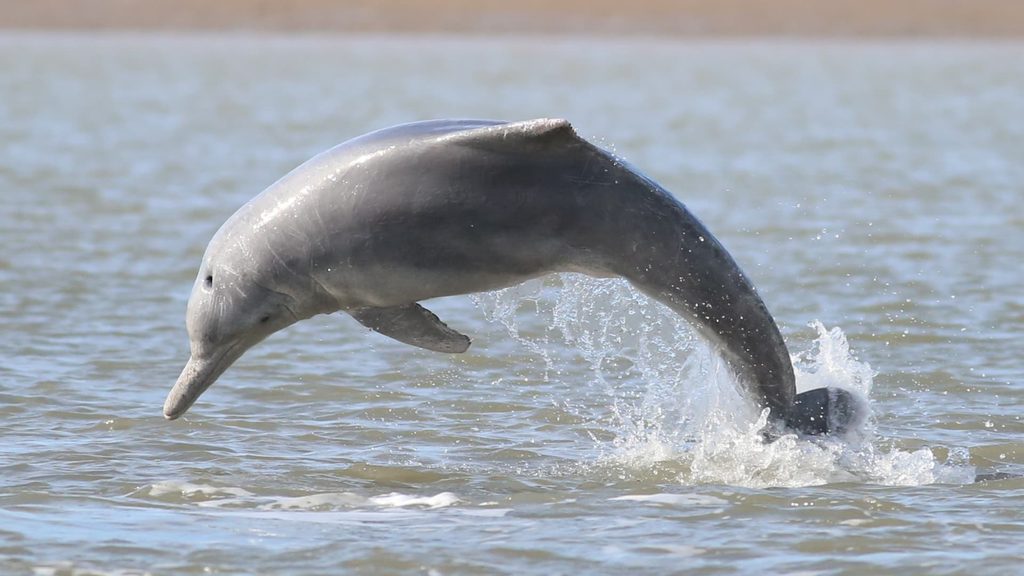
A new three-year research project is helping scientists uncover more about two of Australia’s rarest dolphins, and the Great Barrier Reef may hold important populations of both species.
The Great Barrier Reef Inshore Dolphin Project is investigating Australian snubfin and humpback dolphins across three potential hotspots: Princess Charlotte Bay in Cape York, Repulse Bay in the Whitsundays and Keppel Bay.
Early findings are already encouraging, with preliminary estimates suggesting Princess Charlotte Bay could support around 300 snubfin dolphins – potentially one of the largest documented populations of the species on Australia’s east coast.
With previous research estimating fewer than 10,000 Australian snubfin dolphins and fewer than 10,000 Australian humpback dolphins remaining, understanding where these animals live and how their populations are changing is an important step towards their long-term conservation.
Researchers will gather baseline information on population size, distribution and trends, creating a benchmark that will help track whether populations stabilise, grow or decline over time.
Closer to home, Keppel Bay is one of just three locations across the Great Barrier Reef Marine Park selected for the study, highlighting the significance of our local marine environment as habitat for these threatened species.
Traditional Owner knowledge is also playing an important role in the project, with Darumbal Traditional Owners supporting vessel-based data collection in the region alongside Traditional Owner partners in the other study areas.
The research will help build a stronger understanding of these remarkable dolphins and inform efforts to protect them for generations to come.
Read more about the Great Barrier Reef Inshore Dolphin Project and its research into Australia’s rarest dolphins.
https://www.gbrmpa.gov.au/news/new-research-targets-rare-dolphin-hotspots-across-great-barrier-reef